A home’s security is only as strong as its overlooked entry points. These security tips for private home inspections start with checking that external doors and windows lock properly, then extend to lighting, landscaping, garages and other access areas. A thorough inspection looks at how these features work together, not just whether a lock is present.
It’s natural to focus on the front door, but viewing the whole property can reveal less obvious concerns, from shrubs that obscure windows to a poorly lit side path. This guide covers locks and door hardware, sliding windows and doors, outdoor lighting, garden growth, garage access and security cameras. Use these practical points to assess a home’s everyday security and identify anything that may need attention before you settle in.
Key Takeaways
- Assess locks and door hardware together, and consider whether external doors have more than a key-in-the-knob lock.
- Look for shrubs, branches and other landscaping that could obscure entry points or provide access.
- Review lighting and garage security as part of the same inspection, rather than focusing only on the front entrance.
- Check that cameras, where present, can cover the home’s entry and exit points.
- Make locking doors and windows part of your routine, even when you’re only stepping out briefly.
1. Improving locks and trimming hedges
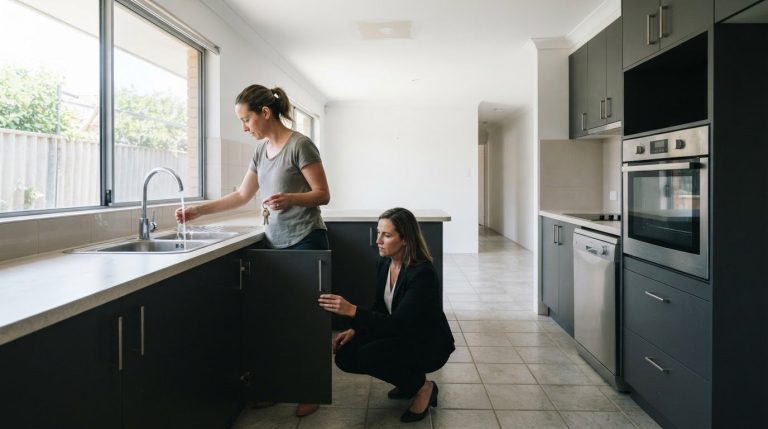
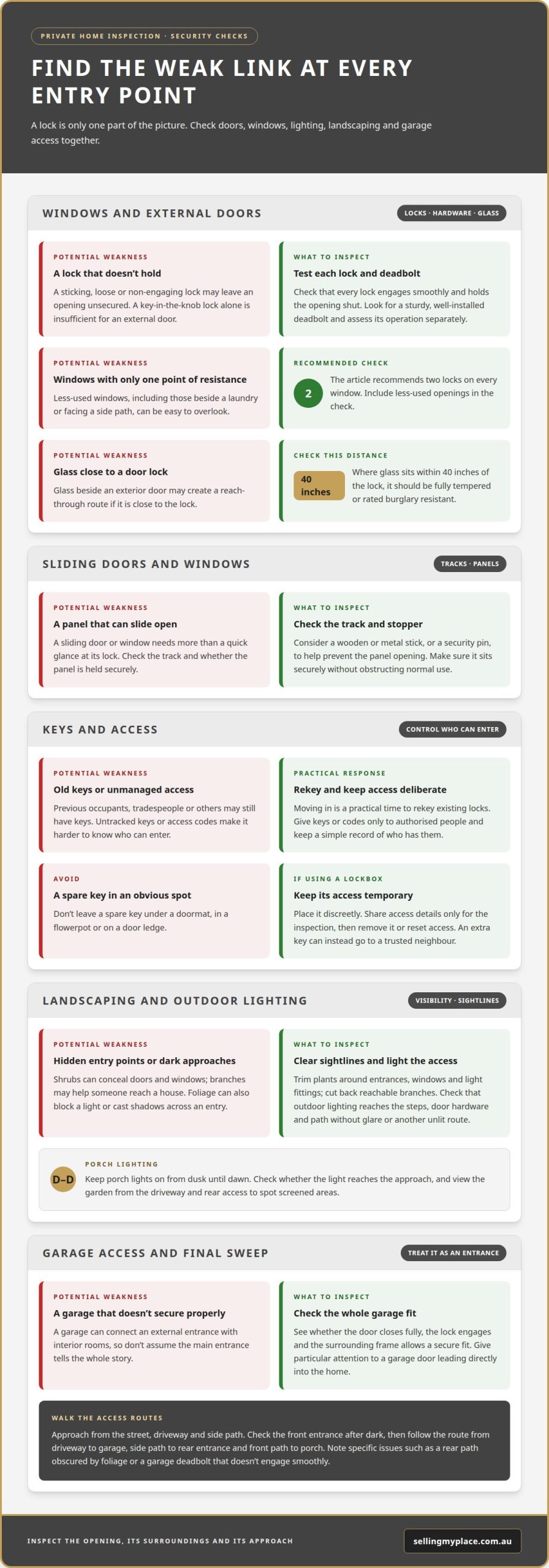
Begin at each external door and window. Check whether the lock engages smoothly and holds the opening shut. A lock that sticks, feels loose or fails to catch needs attention. The recommended approach is to have two locks on every window, giving each opening more than one point of resistance. Include less-used windows, such as those beside a laundry or facing a side path.
At external doors, look for a sturdy, well-installed deadbolt. A key-in-the-knob lock alone is insufficient, so assess the deadbolt separately and note whether it operates cleanly. Glass beside an exterior door also needs consideration: where it sits within 40 inches of the lock, it should be fully tempered or rated burglary resistant. This helps identify a potential reach-through route before relying on the lock.
Moving into a new home is a practical time to rekey its locks. Previous occupants, tradespeople or others may still have keys, and rekeying changes which keys operate the existing locks. On sliding doors and windows, inspect the track and consider a wooden or metal stick, or a security pin, to help prevent the panel from opening. Make sure the device sits securely without obstructing normal use.
Manage access to the inspection deliberately. Give keys or access codes only to people authorised to enter, and keep a simple record of who has them. If you use a lockbox, place it discreetly, share its access details only for the inspection, then remove it or reset access afterwards. Don’t leave a spare key under a doormat, in a flowerpot or on a door ledge. Give an extra key to a trusted neighbour instead.
Landscaping affects how visible entry points are from the street and neighbouring homes. Trim shrubs that conceal doors or windows, and cut back tree limbs that could help someone reach the house. A tall hedge beside a rear window, for example, can hide activity, while a branch close to an upper window may provide a foothold. Keep plants clear of the approach and sightline to each entrance.
Assess locks, tracks and nearby vegetation together. A sound deadbolt is less useful if a concealed window offers an easier way inside. Note any stiff lock, exposed glass, blocked sightline or overgrown branch, then prioritise the specific access point. These security tips for private home inspections make potential weaknesses easier to identify and address.
2. Lighting, landscaping and garages
Walk towards the property from the street, driveway and side path. Notice whether the front entrance is visible after dark and whether a doorway or window sits in deep shadow. Outdoor lighting works best when it illuminates actual access points without creating glare or leaving another route unlit. During an inspection, assess the fittings and the areas they serve as one system.
Keep porch lights on from dusk until dawn. Check whether the light reaches the steps, door hardware and nearby path, rather than just the porch ceiling. A fitting blocked by a hanging plant or directed towards a wall may leave the approach dim. Also consider whether side and rear entrances are visible from the house or neighbouring properties.
Landscaping can reduce the effectiveness of lighting. Trim plants around doorways, windows and light fixtures so foliage doesn’t block the beam or cover the fitting. A dense shrub beside a porch, for example, can cast a broad shadow across the entry even when the light is on. View the garden from several angles, including the driveway and rear access, to spot areas screened by leaves or branches.
Check the garage as a separate access point, not just as storage. Check whether the garage door and lock appear secure and work properly. During the inspection, see whether the door closes fully, the lock engages and the surrounding frame allows a secure fit. A garage that opens directly into the home needs particular attention because it connects an external entrance with interior rooms.
Where possible, test the lighting at different access points and note which spaces remain dark. Follow the route someone would take: driveway to garage, side path to rear entrance, and front path to porch. This makes it easier to spot a dark corner or a light obscured by landscaping. Include the garage door and its deadbolt in the same review rather than assuming the main entrance tells the whole story.
Record specific observations, such as “rear path obscured by foliage” or “garage deadbolt does not engage smoothly”. Clear notes help distinguish a lighting issue from a landscaping obstruction or a door concern. If you’re preparing a property for sale and want to weigh security observations alongside broader property decisions, property sale advice can help you consider the next steps.
3. Common inspection areas
A useful inspection plan covers each entrance, the rooms visitors can access and the information they might encounter. Walk the route a visitor will take, from arrival to departure. Check that the route is clear, private belongings are put away and any camera covering an entrance is positioned appropriately.
Legal responsibilities and privacy requirements can differ between Australian states and territories, and may depend on the inspection arrangement. Keep visitor details secure, explain any recording before it begins, and avoid capturing private conversations or areas unrelated to the inspection.
To verify a prospective buyer’s identity, ask for their name and contact details before arranging access, then confirm their identity when they arrive. If you need to view identification, avoid keeping a copy unless there’s a clear reason and a secure way to store it.
Proof of funds or pre-approval can help you assess a buyer’s readiness, but it doesn’t confirm who will attend. For inspection security, agreed appointments, controlled access and a clear visitor record are more directly relevant.
Before visitors arrive, put away purses, wallets, keys, devices and documents showing addresses, account details or personal schedules. Keep medicines and other sensitive belongings out of accessible rooms. A closed drawer or separate locked space helps prevent accidental access during a walk-through.
Plan for children, pets and occupants before opening the home to visitors. Keep children with a supervising adult, secure pets in a calm, separate area, and tell occupants which rooms visitors may enter. Clear walkways and close the doors to private rooms to reduce disruption and accidental access.
Insurance and liability concerns may involve accidental damage, a visitor’s injury or loss of personal property. How an incident is handled depends on the circumstances, inspection arrangements and relevant policy terms. Record the condition of rooms before access, and note any incident and the people present.
For a record of each visit, note the appointment time, attendee names, arrival and departure, and any agreed follow-up. Position video security cameras to record entrances and exits, with interior cameras covering the home’s entry and exit points. Tell visitors about recording, restrict access to footage, and follow up using the contact details they provided. These practical checks help keep private inspections orderly and easier to account for.
4. Door strength and hardware
Assess the whole door assembly, not just the handle or deadbolt. An external door made from solid wood or metal provides a more substantial barrier than a lightweight internal-style door. Look for splits, loose panels, swelling or damage around the edge, then open and close the door carefully. If it binds, rattles or fails to sit squarely, it may not meet the frame properly.
Next, inspect the strike plate, the metal fitting where the latch or bolt enters the doorjamb. The recommended installation uses at least four 3-inch screws to secure the plate to the jamb. During an inspection, look for visible movement, missing screws or a plate that sits loosely against the frame. A strong lock cannot work as intended if its receiving point is poorly secured.
Check the hinges on the opposite side of the door. The recommended approach secures hinges with 3-inch screws anchored to the sub-frame. Look for loose hinge leaves, missing screws, rust or gaps between the hinge and frame. If the door has several hinges, inspect each one; a single weak fixing can affect how the door sits and moves.
Test the handle and locking hardware with the door open, then closed. The latch should move when the handle turns, and the door should close without force. With the door shut, operate the deadbolt and see whether it enters the strike plate cleanly. If the bolt scrapes, catches or misses its opening, note the problem instead of forcing it.
Inspect the doorjamb and surrounding frame closely, especially near the lock and hinges. Cracks, splintering or a loose fit can indicate that the frame needs attention. A secure-looking deadbolt paired with a damaged jamb, for example, makes the assembly less dependable. Record the exact location of any damage, such as “split beside the upper hinge” or “strike plate shifts during locking”.
Finish by checking every external door, including the laundry, garage entry and side access. Compare how each door closes, latches and locks rather than assuming the front entrance represents the whole home. Checking the door, frame, strike plate and hinges together gives a clearer picture of how the hardware works as a whole. These details can also help distinguish a lock fault from an alignment or frame problem.
After checking the door and its fittings, consider whether each external entrance has a sturdy, well-installed deadbolt. The advice recommends a sturdy, well-installed deadbolt on every external door and says a key-in-the-knob lock alone is insufficient. Check that each deadbolt is present and works smoothly, and note any door that relies only on a key-in-the-knob lock. Don’t leave a spare key under a doormat, in a flowerpot or on a door ledge. If you keep a key outside, avoid these exposed locations. Consider the lock, door and frame as one assembly, since an easily found key can undermine the hardware. Record concerns so they can be addressed rather than overlooked.
5. Doors and windows as potential entry points
In almost half of completed residential burglaries, thieves entered through unlocked doors or windows. Make locking each entrance part of the routine whenever residents leave, even for a few minutes. During an inspection, note which doors and windows are used regularly, including side entrances and rooms opening onto a courtyard. A frequently used door can be easy to overlook when everyone is focused on the front entrance.
External doors made from solid wood or metal provide a sturdier barrier than lightweight alternatives. Check that each door sits properly in its frame and closes fully without being pushed or lifted. A gap, loose panel or door that won’t latch can undermine otherwise sound hardware. Include the door between the house and garage, as well as external doors to laundries or decks.
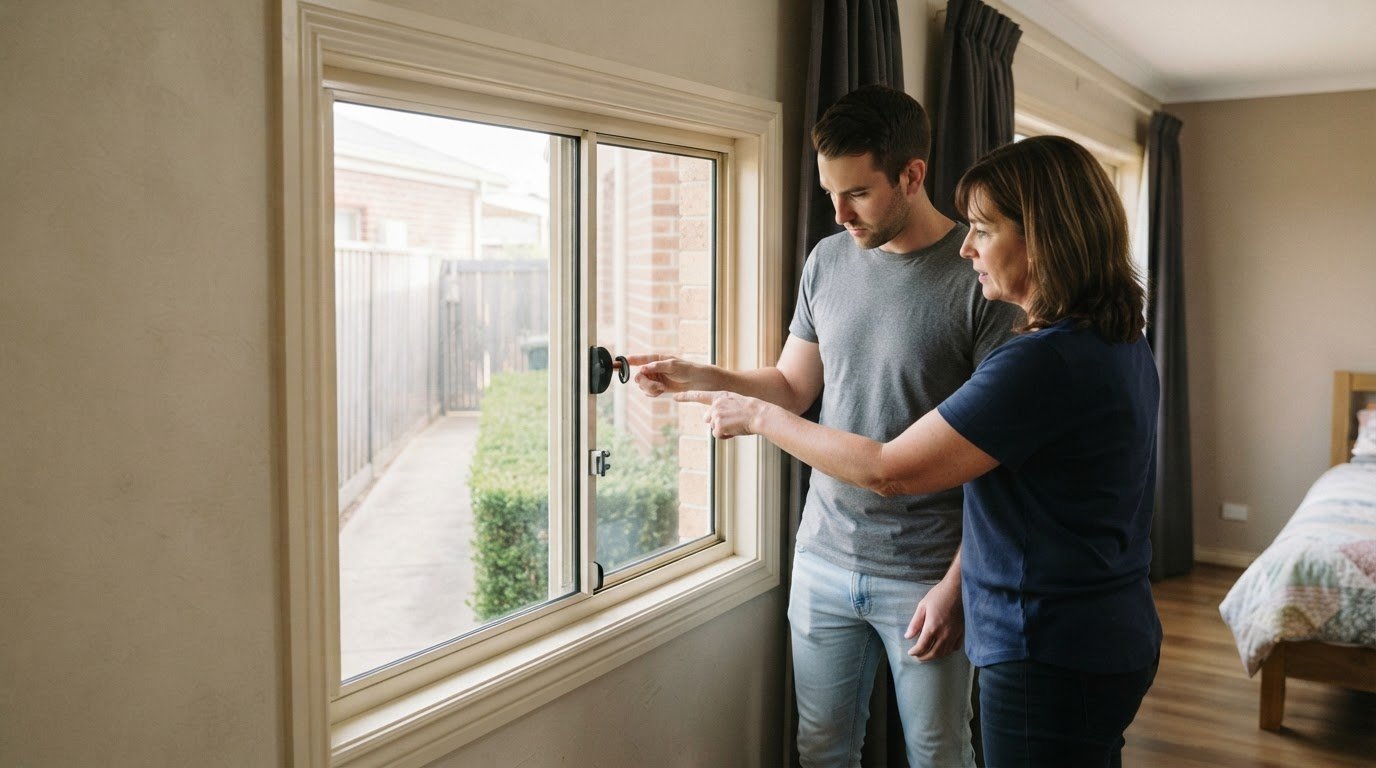
Sliding glass doors and windows need protection against being lifted from their tracks. Fit anti-lift protection, and check whether the frame allows at least two screws in the upper track or through the sliding window frame. These screws help prevent the panel from being lifted out. A wooden or metal stick, or a security pin in the track, can also help secure a sliding opening.
For double-hung windows, vent stops can limit how far the bottom sash opens while still allowing airflow. The recommended opening is approximately 6 inches. Check that the stop holds the sash at that position and that the window can still be secured. This offers a practical option for ventilation, rather than leaving a window fully open and unattended.
At an entry door, a peephole or wide-angle viewer lets occupants see visitors before opening it. Check that the view covers the approach and isn’t blocked by a flyscreen, hanging decoration or nearby wall. Test it from inside at the height people will use it. For a door with glass, consider whether someone outside could reach the internal lock through the panel.
Use a simple room-by-room sequence: test each lock, confirm the door or window closes, then look for lift points or glass within reach. Record faults by location, such as “rear slider lifts from track” or “bedroom sash won’t hold at vent stop”. If these findings shape your property plans, discuss your next property steps with an adviser.
Make locking a deliberate final step, not something residents assume has been done. The advice recommends locking doors and windows whenever residents leave home, even for a few minutes. Build this into the departure routine: check that each opening is closed and latched, then test the handle or lock instead of relying on a quick glance.
For sliding windows, inspect the upper track and frame as part of the same check. The advice recommends inserting at least two screws into the upper track or through a sliding window frame to prevent it being lifted from its track. Check that the screws prevent lifting without stopping normal movement. If a window still shifts upwards or fails to close cleanly, note its location and arrange a repair before relying on it as secure. Repeatable checks make overlooked openings easier to catch.
Kincade International Direct Sales
Kincade International Direct Sales can help you consider how a property’s condition fits into your next move. If you’re preparing to sell, Pre-Sale Property Consulting gives you a way to discuss inspection findings alongside your sale plans. Owners considering a sale can also explore Residential Property Listing Services, while buyers may find Buyer Representation useful when assessing a home and their purchase decision.
Security observations are one part of understanding a property. A clear view of the home’s features, presentation and local market can inform your plans, whether you’re buying or selling. For guidance on your next property decision, contact Kincade International Direct Sales.
Make your next property decision with confidence
A private inspection is a useful opportunity to look beyond presentation and consider how a home works for the people who live there. Keep a written record of any concerns, then decide which need attention before your next step. The record can also help you discuss the property clearly with family or an adviser, without overlooking a small issue.
Use these security tips for private home inspections as a starting point for thoughtful decisions, whether you’re preparing a property for sale or weighing a purchase. Kincade International Direct Sales supports sellers and buyers with property advice, including Pre-Sale Property Consulting, Residential Property Listing Services and Buyer Representation.
If you’re ready to talk through your property plans, contact Kincade International Direct Sales. Take the next step at a pace that feels right for you.
Frequently Asked Questions
What security checks should homeowners do before a private home inspection in Australia?
Before the appointment, confirm who is attending and agree which areas are open for viewing. Walk the planned route, checking that access is clear and private rooms are closed. Take dated photos of fragile or valuable items in shared spaces, then store the images securely. After visitors leave, walk through the home to spot anything out of place and note any damage or access concerns while the details are fresh.